Kansept Dako Review
In one of the early episodes of Star Trek the Next Generation (S1:E17, When the Bough Breaks), the crew transports down to a planet that appears to be a paradise. One of the displays of their fabulous technology is a sculpting tool that reads your mind and vaporizes any material in the target that is not what is in your brain. I have been thinking about this silly throwaway device since I saw that episode when it first aired in February of 1988.
A few things pop into my mind. First, is what it produces art? Setting aside the infamously stupid “Is this art?” debate, supposing it sculpted something like David, would it be art? If the device did the manual labor, does the result still count as art? If the person just had an idea and the thing made the idea, is the person the artist? If so, where is the artistic creation occurring—in the the generation of the mental image or in the device? There are thousands of questions this prop and scene gave rise to in my 11 year old brain that now, 37 years later I am still pondering.
We have kind of reached something like that point in the knife industry. Overseas manufacturing is so good now that a CAD render can be produced with perfect fidelity and flawless fit and finish. It’s not quite the stick thingy that was the prop, but it is a step closer. So what happens when knife makers are freed of the making part of knife making and their blades are technically perfect? The Kansept Dako instantiates this question perfectly.
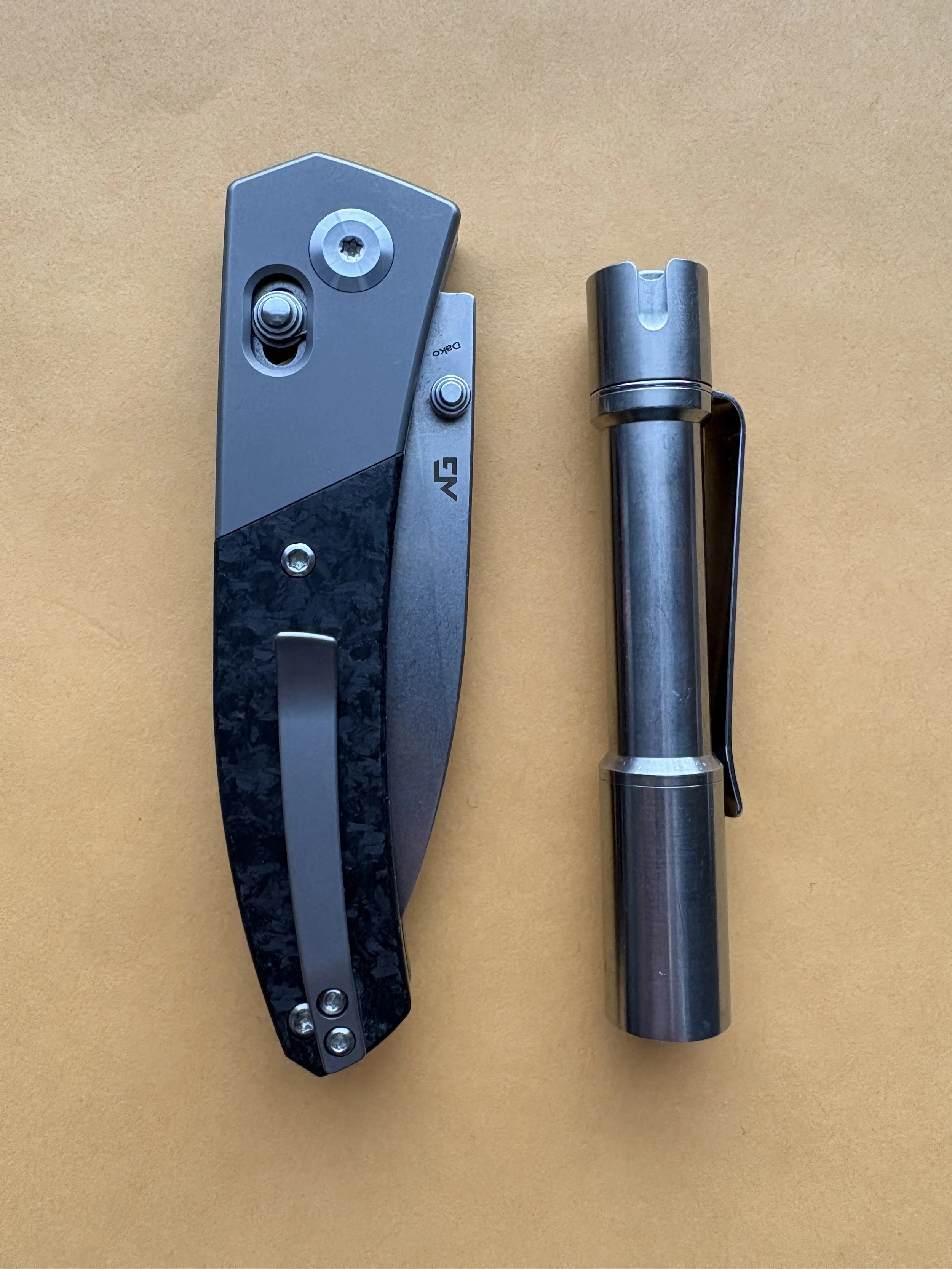
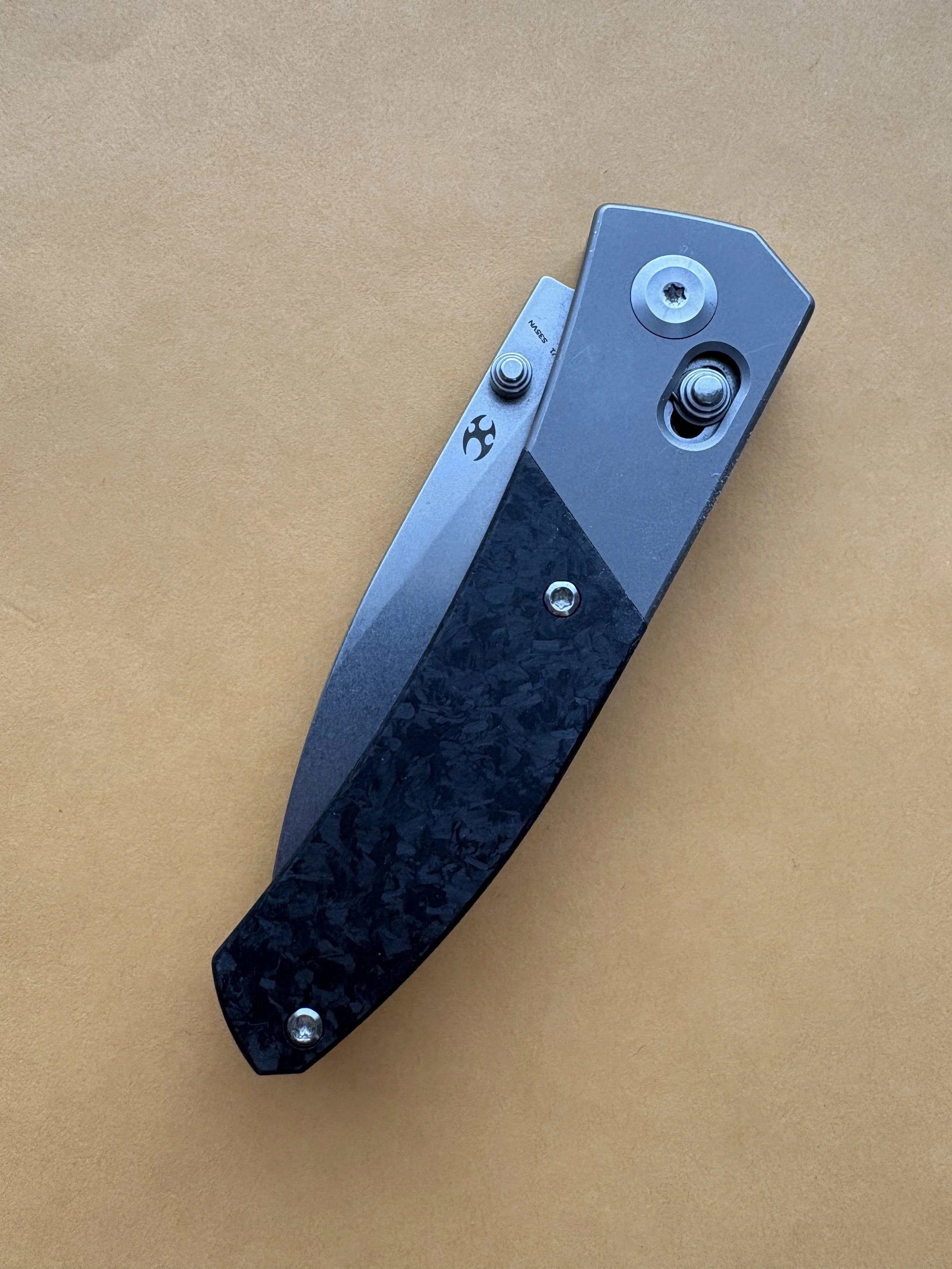
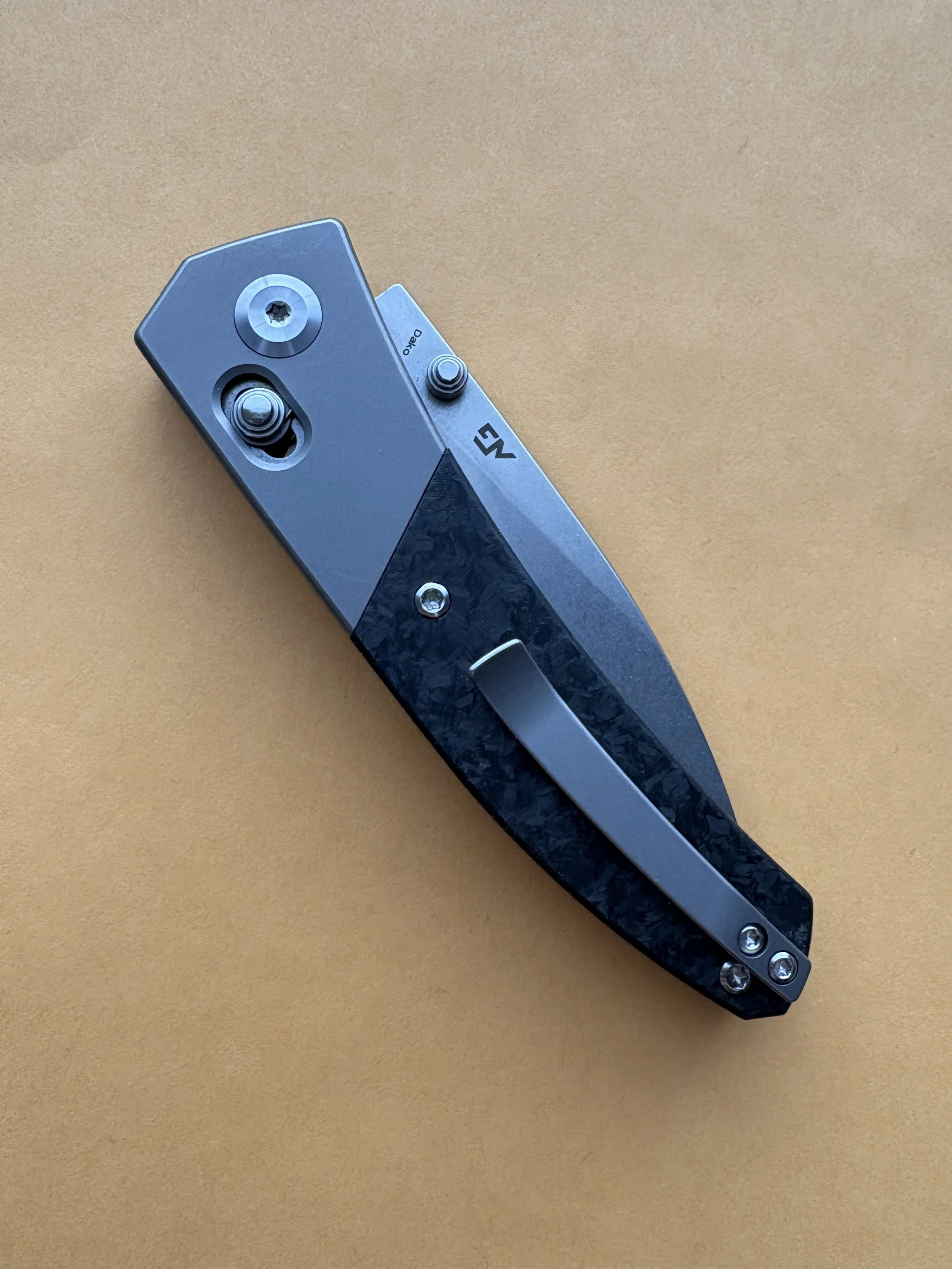
Here is the product page. There are a few variants based on handle material. Here is a video review. Here is a written review. Here is the review sample:
TLDR: Perfectly made, but induces amnesia.
Design: 1
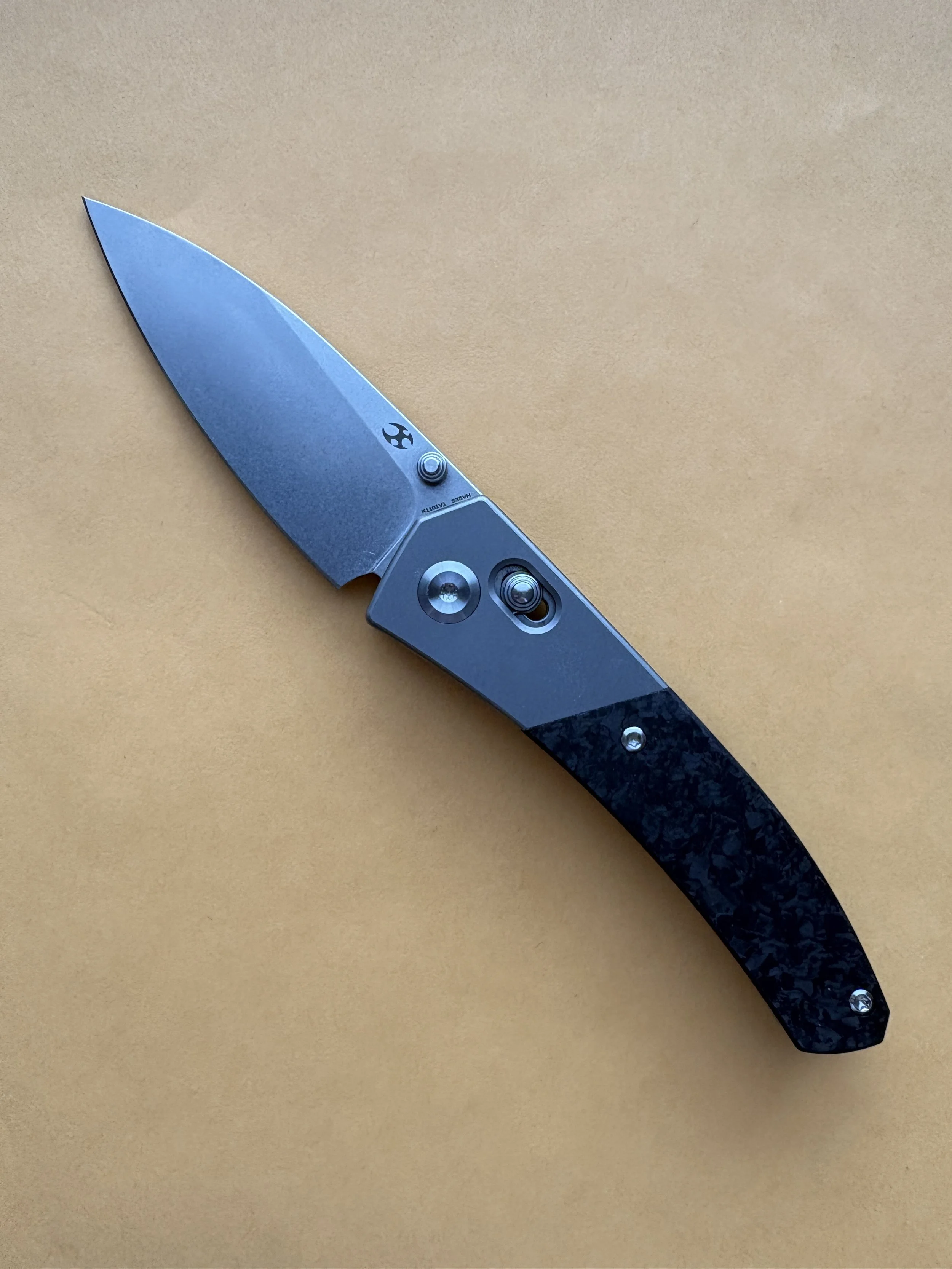
Is it a Shinlin Cutter? Maybe. It is a well-proportioned minimalist design? Yes. Is it exciting? Not in the least. This is very close to a paint-by-numbers design that just doesn’t really snag attention. In a knife like this—that is simple and restrained there has to be something else, something attention grabbing. With the N2, it is a really thin and amazingly slicey blade. With the Sebenza it is an unrelenting focus on fit and finish. With the Dako, its…um…a knife.
The one ding here is, of course, the exposed rear tang. There is no need for this, even if you are tracking the Shinlin cutter pattern very closely. Look at the Spyderco Lum—the clean lines when open and closed still allow for a concealed rear tang. If you are going for an homage, at least pick the best features to copy.
Fit and Finish: 2
Its great. Yawn.
Grip: 1
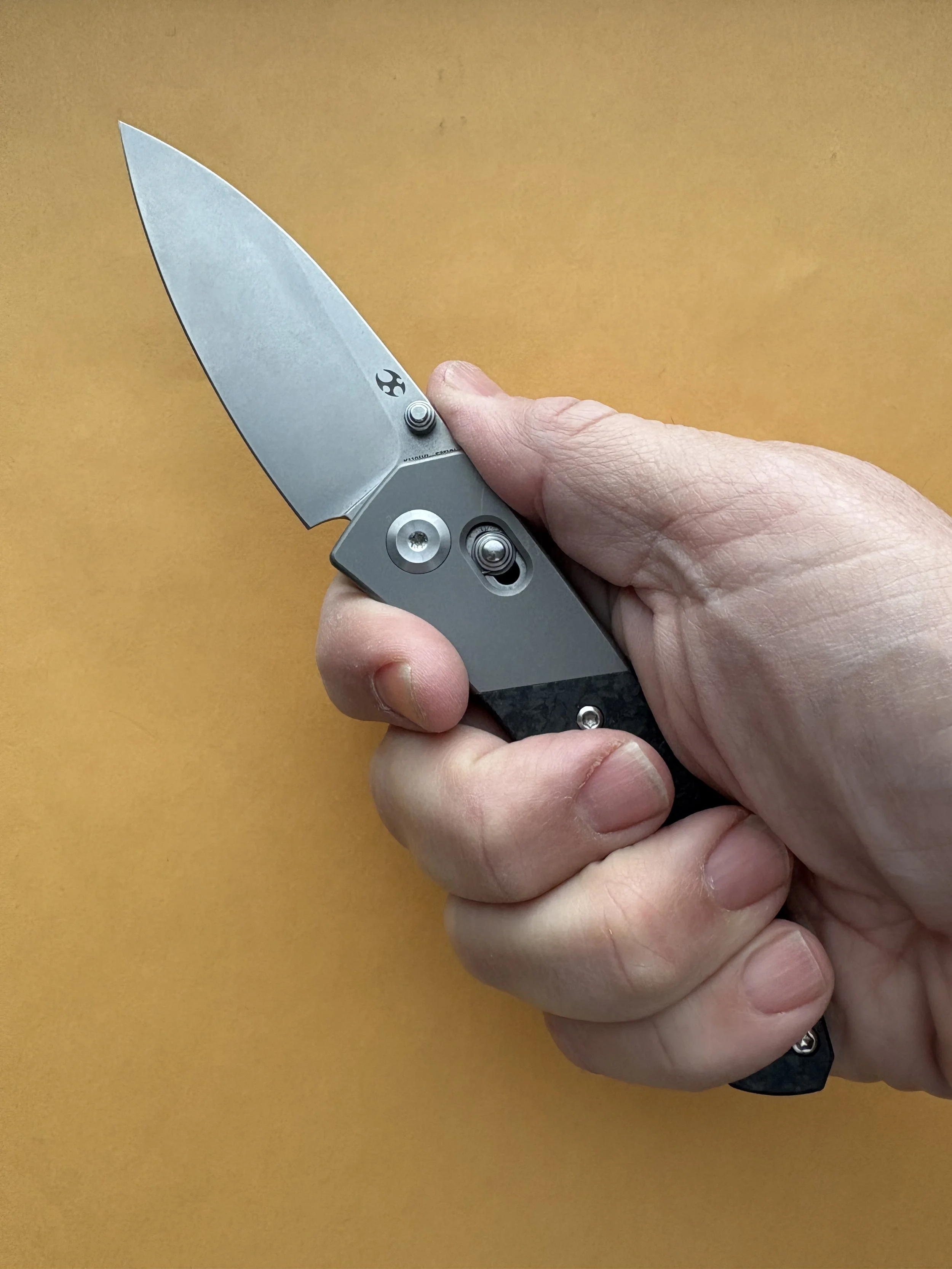
With slab handles, smooth CF, and a tapered tail the Dako wants to squirt out of your hand. It hasn’t happened, but it feels like it could and that really bothers me when I am carrying or using this knife. Compare this to something else with clean lines, like the Sebenza and the Dako doesn’t have the same small design elements to increase grip.
Carry: 2
The smooth, thin handle and a good clip make the Dako great in the pocket. I’ll mention the clip here briefly—its really well done. More on this later.
Steel: 1
S35VN is still a good blade steel, but its at least a generation behind now. If S30V was a Gen 1 PM steel, S35VN is a Gen 2 PM steel, and S45VN is a Gen 3 PM steel then Magnacut or certainly Magnamax is a Gen 4 PM steel. Given its age, you can get better steel for the same money as the Dako. Put differently S35VN is good in use, but no better than average given the steels on the market in 2026. This is the first review with the recalibrated scale, but I think it was more than time to drop down a point.
Blade Shape: 2
They did take the wonderful blade shape of the Shinlin Cutter and made it less cartoony. I actually really, really like the blade shape. It worked especially well in foot prep and as a marking knife. It had a ton of slice and a nice point.
Grind: 2
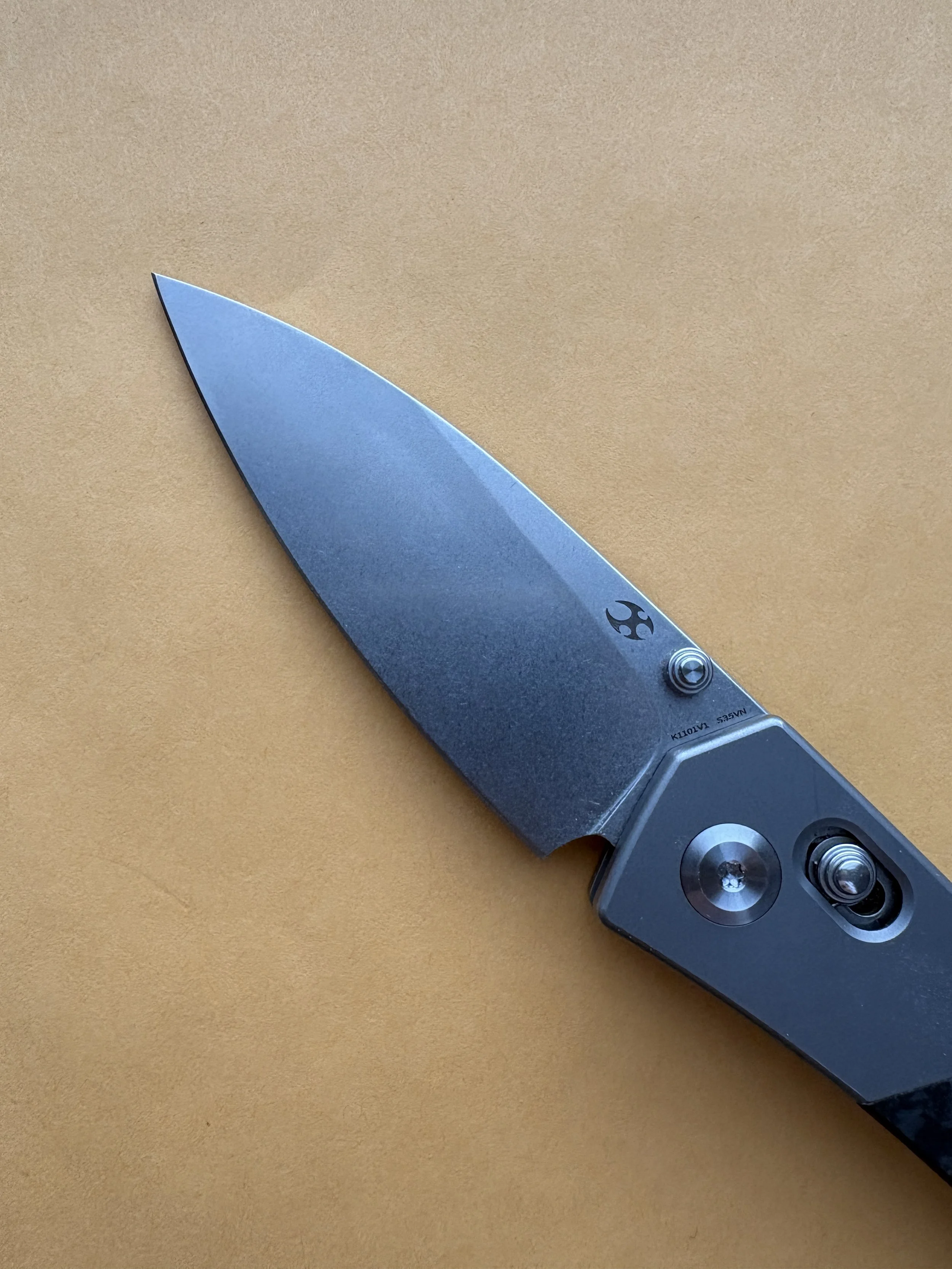
A high thin grind on relatively thin blade stock results in a good grind. And, of course, there is always a relationship between stellar fit and finish and superior grinds and the Dako is Exhibit # 1,345,112 in this argument.
Deployment: 2
Axis locks need a lot of tuning to get that whip-crack deployment and the Dako has it. Its not quite as snappy as my Mini Bugout, but it is really, really close. A bit of polish on the rear tang would probably make it better, but that is a lot of labor time and it would probably push the Dako beyond the $200 price point.
Retention: 2
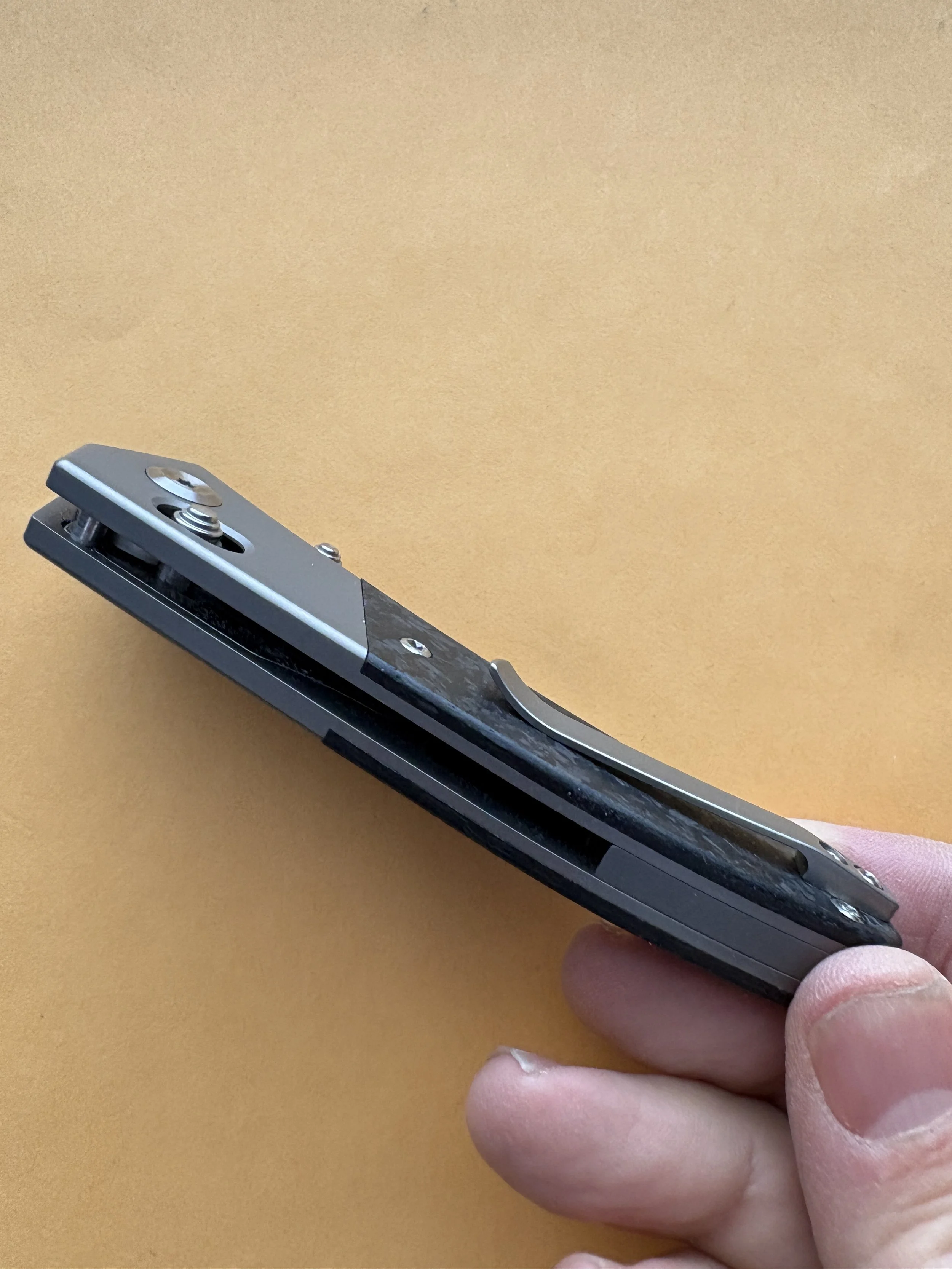
Clips are so tricky to do. Making them work is complicated. Making them look nice is also a challenge. Making clips that do both is basically impossible. The Mnandi’s clip is spectacular and works well. I love Kunwu’s clip too. The Dako’s clip compares nicely to both of these. Its little upturn at the end makes it easy to slide on the lip of your pocket, but it is not so much that it
Lock: 2
The sliding bar lock is an absolutely perfect example of how the intellectual property system in America is broken. By heavily incentivizing being the first to market and not the best to market, the original Axis lock was fiddly and never really changed. The Mini Grip was always accompanied by a caveat about tuning the pivot. Then, when the patent ended, Benchmade produced the Bugout with a truly superior Axis lock. Now dozens of companies make sliding bar locks, even cheap ones, and they are vastly better than those late patent Axis locks from Benchmade. Shortening the exclusivity period would help fix the patent problems and it would fix a ton of problems in the marketplace from sliding bar locks to medication prices.
Other Considerations
Fidget Factor: High
With a smooth pivot and snappy lock, the Dako does well.
Fett Effect: Low
The bead blasted bolster is probably the only thing that will show wear.
Value: Low
S35VN on a $180 is not great, especially when there are Civivis with similar materials and only slightly worse steel.
Overall Score: 17 out of 20
The fit and finish is impeccable and the clip is noteworthy. The knife feels solid and competent in pretty much every way, but in a world where perfect knives are dropped out of machines thousands at a time, the Dako suffers the worst of all fates—its boring. S35VN is the very definition of snore in terms of steel. The handle is good but not great—flat and tapered at the end. The blade shape is fine, but nothing to write home about. Even when stuff is legit good, the Dako can’t stand out from the crowd because nowadays EVERYONE does this stuff well. Lock up is good, just like everyone else. The blade grind is good, just like everyone else. The blade finish is good, just like everyone else. The blade centering is spot on, just like everyone else. In a world of technical perfection, unique designs stand out even more and the Dako, for all its virtues, isn’t all that unique. It’s kinda, sorta a Shinlin Cutter brought into modern times, which, given the existence of the Spyderco Lums and a few knives from Vosteed, there are many of these to choose from. So even in that regard, the Dako is one of many. This is a yawn-inducing but technically perfect knife. And in 2026, that’s probably not enough to stand out in a crowded marketplace. If you love the look or are a Kansept fanboy, the Dako is good. For the rest of us, there are probably better knives out there.
Competition
How many knives are like the Dako? So many that we can eliminate all other knives that don’t sound the same and the Dako still loses the comp. Is the Dako better than the similarly named Deka? Nope. And unfortunately for the Dako, the Deka is similar but better in a dozen ways. The Deka is lighter than the Dako. The Deka has a concealed rear tang and the Dako does not. The Deka has the exact same lock as the Dako. The Deka is cheaper than the Dako ($143.95 vs. $179.95). And the Deka is Made in the USA. That last part is not the biggest deal in the world, but it is a great tie breaker and here, it’s not even a tie. Now losing a comp to one of the best knives on the market isn’t a terrible thing, but when both are readily available how can you possibly justify the Dako over the Deka? I don’t think you can.
And it is like that with a half dozen or so other knives—the N2, the Dragonfly II, the Bel Air, the Riv, the Bugout (both Mini and full-sized). In the end the Dako isn’t bad its just forgettable. When I posted a picture of the knife on IG and said a review was coming Seth30V replied: “I liked it quite a bit. I just couldn’t bring myself to care about it, though.” That’s the reality of the situation. This is a very good knife on a technical level but a year from now I won’t remember it a stitch. And there is the problem with this huge wave of technically perfect knives coming out of China like a tsunami (and the problem with really good AI products right now)—there is nothing memorable about them. They are perfect, maybe too perfect, but without the insight, instinct, and quirkiness of something that sticks in your brain for a long time. Better brash than boring.
Amazon Links